
BIRD & BECKETT CULTURAL LEGACY PROJECT
Hindustani Classical Music
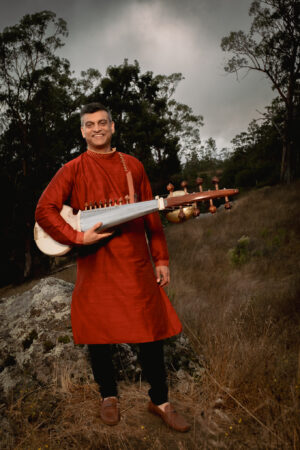
Mallar Bhattacharya, sarod
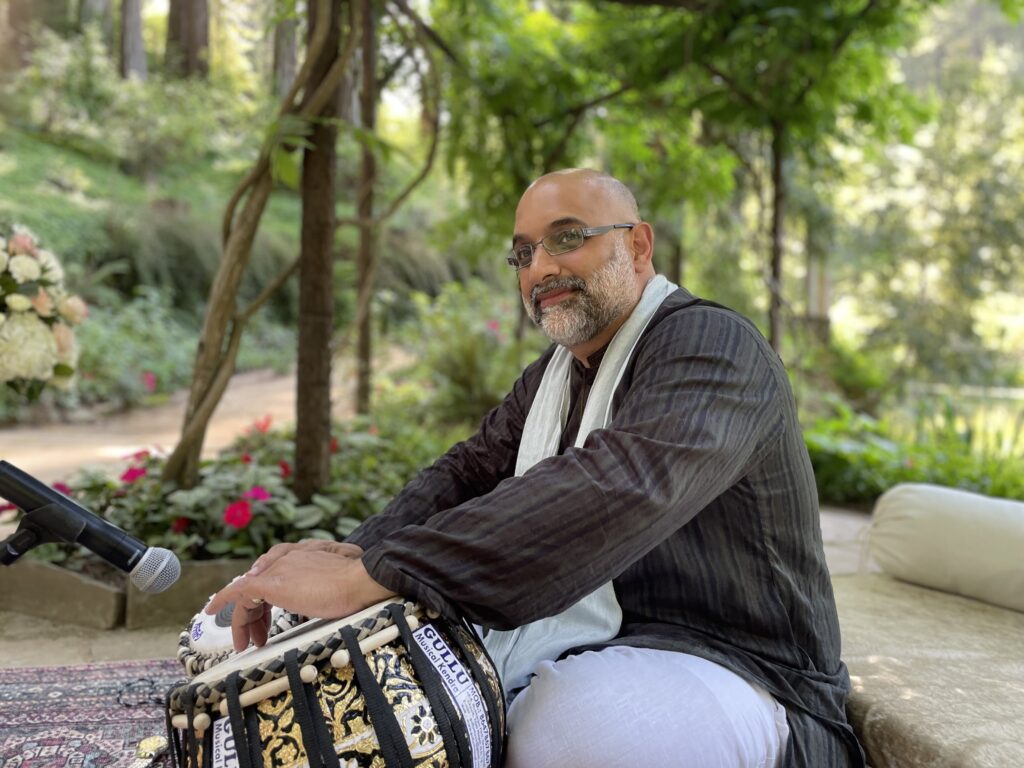
Ferhan Najeeb Qureshi, tabla
$20/byob
Reservations: 415-586-3733
Live stream found on our YouTube channel
and Facebook page / donations appreciated
Mallar Bhattacharya is a sarodist of the Acharya Baba Allauddin Seni Gharana of Maihar, India. Mallar began his musical training at the age of three, learning both Western and Hindustani violin from his father Dr. Jahar Bhattacharya, a student of Ustad Ali Akbar Khan. Mallar became a disciple of Ustad Aashish Khan at age 15 and has also studied the music of the Ali Akbar College of Music in San Rafael, California for over 35 years, having learned directly from Ustad Ali Akbar Khan and his archival material over that time. Mallar recently released a single of the raga Bhimpalasi, which is available on most streaming platforms: https://www.youtube.com/watch?v=WM-ybSLfMPs&list=OLAK5uy_mRKN1uCZmznjvmUZ0wCIpIf7mS3eMCo9o.
Ferhan Najeeb Qureshi is a senior disciple of the legendary tabla master Ustad Tari Khan. Prior to his ongoing training with Ustad Tari Khan, Ferhan took his initial lessons in Hindustani music theory and practice with Surinder Singh Mann. Ferhan studies the Punjab gharana of classical tabla which both of his teachers represent. In addition to performing tabla lehara (tabla solo), Ferhan Qureshi has also accompanied numerous distinguished classical artists (vocalists, instrumentalists and dancers) both in the United States and in Pakistan.
The Vedic chant tradition originated in ancient India some three thousand years ago, setting the Sanskrit Vedas in metrical form for oral transmission. The North Indian (Hindustani) and South Indian (Carnatic) musical traditions diverged in about 1200 CE from this common root, both comprising other elements as well, and continuing to this day to be the principal traditions of Indian classical music with their own highly developed conventions, practices and repertoire. For both, melodic modes, the ragas, are combined with metrical beat cycles, the talas. Hindustani music adds to the Vedic material melodic ideas from Persian Sufi folk traditions among other sources, and was developed through the work of numerous eminent composers such as Tansen (1493-1584) of the Mughal era.
Indian classical music, Hindustani and Carnatic alike, is very much about improvisation, its beauty in performance derived from the tradition coupled with the well-schooled artist’s skills and intuition, as he or she works through brilliantly imagined permutations of the material, combining notes and scales at different tempos in the moment.
Suffice to say, the music is rich and complex, and we would venture that it is far more important to experience the music in performance than to be satisfied with any written account — though we would not hesitate to recommend making a study of the available texts.